
The New Toronto Declaration
Chapter 2: Treating the patient, not the timeline
Loading protocols should be patient-specific, not time-specific
The assumption
Loading protocols are traditionally described in terms of time.
Immediate, early or delayed loading are often defined by a certain number of days, weeks or months after implant placement.
This creates a familiar timeline for treatment.
But patients do not all heal according to the same calendar.
The question
The Toronto Declaration invites us to reconsider what should determine the right moment for loading:
Should loading decisions be driven primarily by time?
Or should they reflect the biological and biomechanical conditions of the individual patient?
The new perspective
The Declaration shifts the focus from time-specific to patient-specific loading.
Bone quality, primary stability, implant design, occlusal conditions, prosthetic planning and individual risk factors all contribute to the clinical situation.
The central question therefore becomes less about whether treatment should be “immediate” or “delayed”, and more about whether the conditions for loading are right for this specific patient.
The calendar does not treat the patient. The clinical situation does.
Why it matters
A patient-specific approach encourages clinicians to evaluate loading as part of the complete treatment strategy rather than as a predefined point in time.
Planning, surgery and prosthetics become more closely connected, because decisions made during one phase influence the possibilities available in the next.
The objective is not simply to load as early as possible.
It is to load when the biological and biomechanical conditions support the intended treatment.
Clinical reflection
When deciding when to load an implant, what drives your decision most?
Is it the time that has passed since implant placement?
Or the biological and biomechanical conditions of the individual patient?
Watch the film
Discover how the Toronto Declaration challenges time-driven loading protocols and explores a more patient-specific approach to treatment decisions.
▶ Watch the film
Continue the journey
Once the patient becomes the starting point, our perspective needs to extend beyond the implant and the surrounding bone.
Because long-term success depends on more than bone alone.
→ Continue to Principle 8
Moving beyond bone-centred thinking: A new strategy for preventing crestal bone loss and peri-implantitis
The assumption
Implant treatment has traditionally placed strong emphasis on bone.
Bone volume, bone quality, implant position and osseointegration are fundamental considerations when planning and evaluating implant treatment.
But successful implant therapy does not take place in bone alone.
The question
The Toronto Declaration asks us to broaden the perspective:
What happens when we stop looking at the implant and bone as an isolated system?
And instead consider bone, soft tissue, implant position, emergence profile, prosthetic design, cleanability and long-term maintenance as parts of the same biological environment?
The new perspective
The Declaration proposes a shift from bone-centred thinking to tissue-centred thinking.
The objective is not simply to place an implant successfully within available bone.
It is to create a stable biological environment around the entire implant-restoration complex.
Implant position, the implant-abutment interface, soft-tissue thickness and stability, emergence profile, restorative design and maintainability all become part of the same treatment philosophy.
Think beyond bone. Design for the complete tissue environment.
Why it matters
This perspective connects decisions that are sometimes considered separately.
Surgical positioning influences prosthetic possibilities. Prosthetic design influences the peri-implant environment. Soft-tissue architecture affects the long-term interface between restoration and biology.
As a result, the prevention of future complications does not begin during maintenance.
It begins during treatment planning.
Clinical reflection
When planning an implant case, how early do you consider the final tissue environment?
Are soft tissue, emergence profile, restorative design and long-term cleanability consequences of implant placement?
Or are they factors that help determine implant placement from the start?
Watch the film
Explore how the Toronto Declaration moves beyond bone-centred thinking and considers the complete biological environment surrounding the implant restoration.
▶ Watch the film
Continue the journey
Thinking beyond bone also changes the way we look at anatomy.
When tissue volume is limited, adding more tissue may appear to be the obvious solution.
But is more treatment always better treatment?
→ Continue to Principle 9
Contourization can be a rational alternative to regeneration
The assumption
When anatomy is considered insufficient for implant treatment, regeneration is often the logical next step.
Creating more volume can provide additional possibilities for implant placement and restorative planning.
But increasing volume is not necessarily the only way to solve every clinical situation.
The question
The Toronto Declaration invites us to ask:
Does every anatomical limitation need to be corrected through regeneration?
Or can the available anatomy sometimes be used more intelligently to achieve a predictable biological and prosthetic outcome?
The new perspective
The Declaration introduces contourization as a rational alternative in selected clinical situations.
This does not mean rejecting regenerative procedures.
Instead, it challenges the assumption that more extensive treatment is automatically the better treatment.
The objective is proportionality: choosing a treatment strategy that achieves the required biological and prosthetic outcome without making the intervention more extensive than necessary.
The best treatment is not always the most extensive treatment.
Why it matters
Every additional surgical intervention introduces another dimension into treatment planning.
By considering both regenerative and non-regenerative strategies, clinicians can assess what is actually required for the individual situation.
The question therefore becomes not simply:
“Can we regenerate this anatomy?”
But:
“What does this patient actually need to achieve a predictable and maintainable result?”
Clinical reflection
When confronted with limited anatomy, is your first question how the missing volume can be reconstructed?
Or do you first consider whether the existing anatomy can be used differently?
And what would constitute the least extensive treatment that still meets your biological and prosthetic objectives?
Watch the film
Discover how the Toronto Declaration explores contourization and challenges us to think differently about proportionality, anatomy and regenerative treatment.
▶ Watch the film
Continue the journey
If different anatomical situations can require different surgical strategies, another assumption deserves reconsideration:
Should one implant design be expected to adapt to every biological situation?
Or should implant design be able to follow biology?
→ Continue to Principle 10
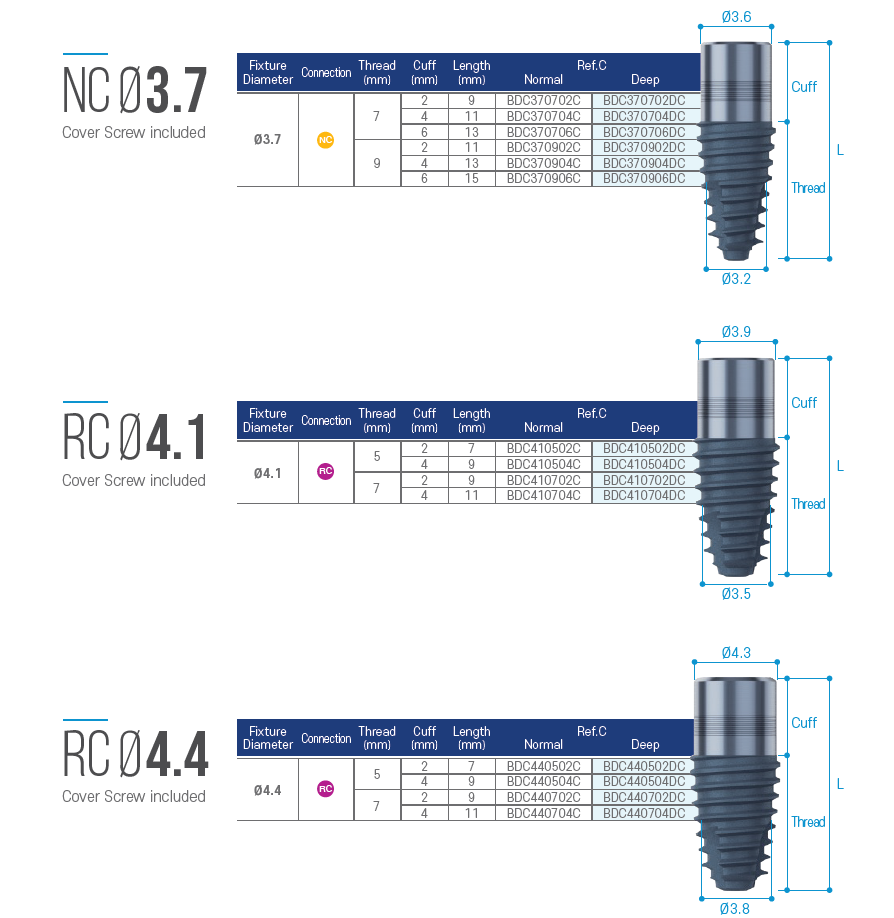
Biology-based implant systems with cuff design should be accepted as a new surgical strategy option
The assumption
Implant dentistry has historically sought standardisation.
A familiar implant concept, surgical workflow and restorative approach can provide consistency across a wide variety of clinical situations.
But anatomy is not standardised.
And neither is biology.
The question
The Toronto Declaration therefore asks:
Should biology always be adapted to accommodate the implant?
Or should implant design adapt to the biological and anatomical situation?
The new perspective
Different anatomical conditions may require different implant strategies.
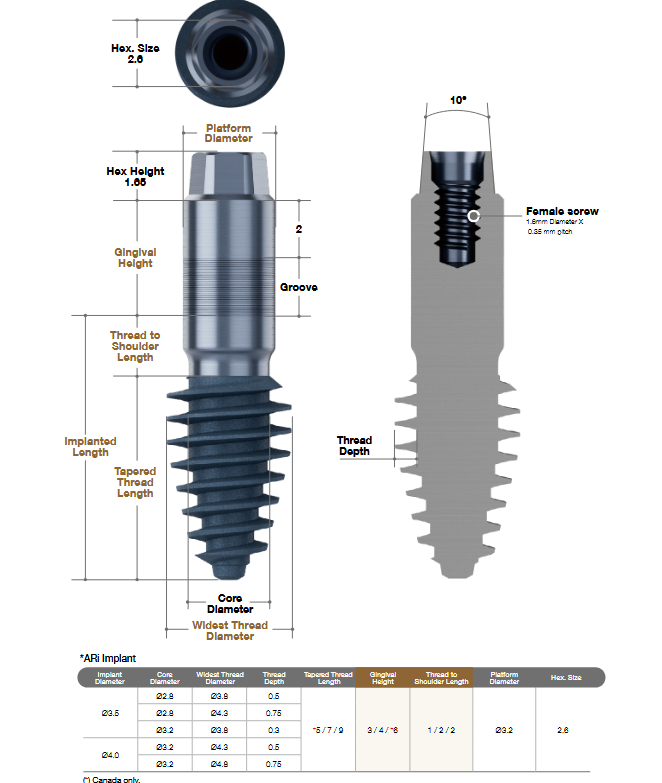
A cuff design creates a different relationship between the implant, crestal anatomy and surrounding soft tissues, introducing an additional treatment option for situations in which a conventional implant approach may not automatically represent the most appropriate biological strategy.
The broader principle goes beyond one specific design.
It is about allowing the implant strategy to respond to anatomy and biology rather than forcing every clinical situation into the same concept.
When biology changes, implant strategy should be able to change with it.
Why it matters
Implant design is not simply a technical characteristic of a product.
It influences the relationship between implant position, bone, soft tissue and the future restoration.
Considering design as part of the treatment strategy gives clinicians another variable with which to respond to different anatomical and biological situations.
Instead of choosing the implant first and adapting the patient to it, the sequence of thinking can be reversed:
Understand the biology. Define the treatment objective. Then select the appropriate strategy.
Clinical reflection
When selecting an implant, how much does the individual anatomy influence your choice of implant design?
Do you work from one preferred concept whenever possible?
Or do different biological situations lead you to consider fundamentally different implant strategies?
Watch the film
Discover how the Toronto Declaration explores biology-based implant design and the idea that implant strategy should be able to adapt to different anatomical situations.
▶ Watch the film
Continue the journey
Chapter 2 has moved the discussion from standardised protocols towards patient-specific treatment:
- From time-driven to patient-specific loading
- From bone-centred to complete tissue thinking
- From standard regeneration to proportional treatment
- From one implant concept to biology-based design
But patient-specific treatment also raises a more difficult question.
Sometimes the solution that appears simplest today may not create the best conditions for tomorrow.
And that brings us to the question at the heart of the next chapter:
What should we actually define as implant treatment success?
Chapter 3
Redefining the outcome
From technical survival to long-term tissue preservation.
→ Click the image below and continue the journey with chapter 3

 Waarom wij een AI-medewerker hebben aangenomen? Omdat we juist het persoonlijk contact met